How to Turn Wedding Photos Into Framed 3D Layered Art

To turn a wedding photo into WTx3D art, the studio first reviews and prepares the source image. WTx3D then engineers the color layers, creates a digital proof, and waits for the customer’s approval before fabrication begins.
The photograph supplies the people, place, and memory. WTx3D adds the crop, tonal preparation, layered construction, frame, finishing, inspection, and presentation.
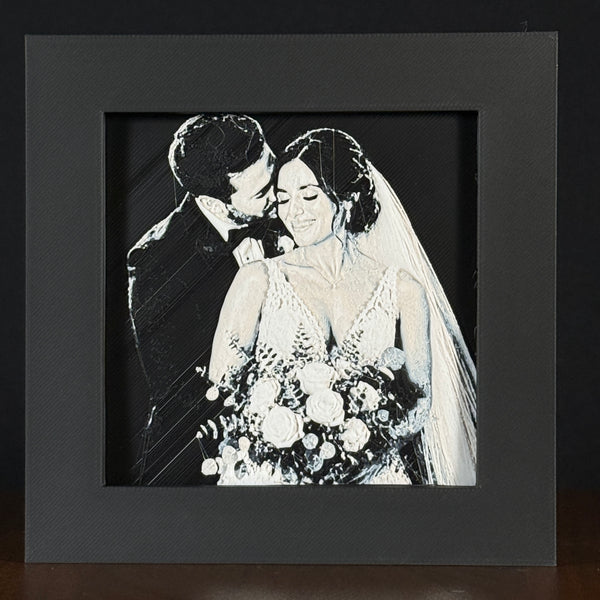
The result is not a paper photograph placed behind glass. It is a finished dimensional art piece built from the approved image and made to be displayed.
Explore Wedding & Anniversary Custom Photo Art.
What framed 3D layered wedding art actually is
A poster, photograph, or canvas reproduces an image on one flat surface. WTx3D builds the image through physical layers of premium PLA, a lightweight plant-based polymer suited to detailed indoor display art.
The colors are not painted onto the finished surface, printed on paper, or added as stickers. Each color becomes part of the artwork itself. Most WTx3D designs use approximately four to six coordinated colors and 30 to 60 physical layers, depending on the photograph, palette, and amount of detail.
Those changing layers create real texture, separation, highlights, and shadows. From straight ahead, the piece reads as the wedding portrait. From an angle, the raised surface and transitions become easier to see. The appearance can shift slightly as the room lighting and viewing angle change.
Every standard framed piece includes WTx3D’s preferred Charcoal Matte frame. It was selected for a rich, low-glare presentation that supports the artwork rather than competing with it.

How WTx3D turns the photograph into layered art
1. Start with the strongest original file
Use the original phone, camera, scan, or authorized photographer file whenever possible. A screenshot, social-media download, or repeatedly texted copy may contain less usable detail because the image has been compressed.
Professional photography is not required. A clear phone photograph can work very well.
When the image came from a professional photographer, the customer must own the reproduction rights or have permission to use it for the custom order. Access to an online gallery or purchase of a print does not automatically grant every reproduction right.
2. WTx3D reviews the source image
The photograph is evaluated for:
- Face and subject size
- Lighting and contrast
- Focus and motion blur
- Crop and obstruction
- Background separation
- Clothing, hair, flowers, and other meaningful details
- The quality of the physical layered result the source can support
The question is not whether the file passes one rigid technical rule. The question is whether it can become artwork WTx3D would be proud to ship.
When another photograph would clearly produce a stronger result, WTx3D may recommend using it rather than forcing a weak source into production.
3. The image is prepared individually
A custom wedding photograph is not dropped into a one-click converter.
Depending on the image, preparation may include:
- Removing or simplifying the background
- Adjusting the crop and placement
- Improving brightness and contrast
- Balancing whites and dark areas
- Increasing separation around faces, hair, clothing, flowers, and objects
- Improving sharpness where genuine detail remains
- Evaluating the strongest color direction
- Making subject-specific adjustments for the layered build
Most Custom Photo Art uses a clean dark foundation because it gives the subject strong separation. An alternate treatment may be considered when it clearly produces a better result.
4. The physical color structure is planned
The approved-looking image still has to become a buildable piece.
WTx3D plans the color order, layer transitions, subject separation, and fabrication approach so the portrait remains readable as physical art. Different parts of the same piece may require different settings to preserve faces, clothing edges, flowers, architecture, or other fine details.
This is where image preparation becomes engineering applied to art.
5. The customer receives a digital proof
The proof shows the planned crop, color direction, wording when applicable, and overall presentation before fabrication.
Up to two reasonable proof revisions are included. Those revisions may cover changes such as:
- Palette direction
- Minor crop or layout adjustments
- Text corrections
- Comparable frame changes within the same pricing level
A completely different photograph, major composite, facial reconstruction, or substantially new concept may require separate review or an additional design charge.
6. Nothing enters production until approval
The customer approves the final proof before the artwork is fabricated.
That approval step protects both the customer and the studio. It gives the customer a clear opportunity to review the image, crop, spelling, color direction, and overall design. The customer does not have to order a custom product and hope an automatic process gets everything right.
For a Custom Photo 4-Pack, the four images are prepared individually and shown together in one combined proof so the customer can review the complete set.
7. WTx3D fabricates, finishes, frames, inspects, and packages the piece
After approval, the artwork is fabricated, finished, assembled, framed, inspected, and packaged in West Texas.
The pre-shipment review includes surface quality, color, frame fit, assembly, stability, sharp edges, cleanliness, correct customer details, and packaging. The studio’s standard is simple: If we would not proudly display it ourselves, we will not ship it.
What WTx3D may improve—and what it cannot invent
| WTx3D may improve | WTx3D cannot honestly promise |
|---|---|
| Crop and placement | A clear face that was never captured |
| Background simplification | Authentic features hidden behind another person or object |
| Brightness, whites, darks, and contrast | Unlimited detail from a tiny or heavily compressed subject |
| Sharpness where real information remains | Exact reconstruction of severely blurred lace, jewelry, or lettering |
| Separation around hair, clothing, flowers, and faces | A seamless new group portrait from unrelated photographs without review |
| Color and palette direction | Exact screen-to-material color matching in every room and device |
The goal is not to claim perfect restoration or unlimited editing. The goal is to create the strongest physical artwork the real source image allows.
What the wedding photograph should provide
The detailed source-photo guide covers this topic fully, but five checks settle most submissions:
- The image matters. Start with a photograph the couple genuinely values.
- Important faces are large enough. A high-resolution file can still contain distant people.
- Useful highlight and shadow remain. The image needs enough real information to preserve faces, clothing, and expression.
- Important features are not heavily blocked or cut off. Missing information cannot simply be recreated.
- The strongest original file is available. Send the original rather than the smallest copy in the camera roll.
Read the full selection guide: Which Wedding Photos Work Best for Custom Layered Art?.

Wedding-specific image challenges
White dresses and bright highlights
A white dress can work beautifully when the photograph still contains shadow, folds, texture, and separation from the background. If the dress is completely overexposed, the missing lace or fabric detail cannot be recovered exactly.
Dark suits, dark hair, and dark backgrounds
Dark subjects may need stronger highlights or tonal separation so important edges do not disappear into the dark foundation layer. WTx3D evaluates the palette and background treatment for the specific image.
Groups, venues, and small details
A close couple portrait normally preserves more facial detail than a wide ceremony image. A venue, bouquet, rings, invitation, or other wedding detail may work better as its own position in a four-photo set rather than being forced into the background of one crowded piece.
One photograph or four?
Choose one larger portrait when one image is clearly the wedding’s defining memory and facial detail matters most.
Choose a Custom Photo 4-Pack when the gift needs to show several moments, people, places, or stages of the relationship. The four pieces are individually framed, removable, rearrangeable, and proofed together as one coordinated set.
For the full purchase decision, read Anniversary Gifts Made From Wedding Photos: One Portrait or a Four-Photo Story?.
For help selecting the four images, read Wedding Photo 4-Pack Guide: How to Choose Four Images That Tell the Whole Story.

What to check before approving the proof
Before approving, review:
- The correct photograph or four-photo set
- The crop and placement
- Faces and meaningful details
- The color direction
- Names, dates, and spelling
- The selected frame path
- The overall coordination of a 4-Pack
Once the proof is approved, production normally begins soon afterward and further changes may no longer be possible.
Turn the wedding photograph into something made to be displayed
The wedding photograph already contains the memory. WTx3D turns the approved image into physical layers, a finished frame, and a display piece built specifically for the customer.
Start with the strongest image available. WTx3D will review what it can support before anything is fabricated.
Create Wedding & Anniversary Custom Photo Art
For a separate-photo composite, unusual crop, custom frame, professional-image permission question, poor source file, or fixed presentation date, use the WTx3D contact page before ordering.
Frequently Asked Questions
Is WTx3D wedding art a flat print inside a frame?
No. The image is built from physical color layers that create real texture and depth. The colors are part of the artwork rather than a paper photograph, surface paint, or stickers.
How many colors and layers are used?
Most WTx3D designs use approximately four to six coordinated colors and 30 to 60 physical layers. The exact structure depends on the photograph, palette, and detail.
Can a phone wedding photo work?
Yes. A clear phone photograph can work very well. Send the original file whenever possible rather than a screenshot, social-media copy, or repeatedly compressed version.
What does WTx3D change in the photograph?
WTx3D may simplify the background, adjust crop and placement, improve brightness and contrast, balance whites and darks, sharpen genuine detail, improve subject separation, and plan the color direction for the layered build.
Can a white dress and dark suit both retain detail?
They can when the source photograph contains enough real highlight, shadow, and separation. WTx3D adjusts the image for the strongest result, but it cannot recreate detail that was completely overexposed, blocked, or blurred.
Will the finished piece look exactly like the proof on my screen?
The finished artwork is designed to closely follow the approved proof. Small differences may occur because screens, physical materials, room lighting, and raised layers reflect color and light differently.
When does production begin?
Production begins after the customer approves the final digital proof. Up to two reasonable proof revisions are included before approval.
Can professional wedding photographs be used?
They may be used when the customer owns the reproduction rights or has permission under the photographer’s terms. A gallery download or print purchase does not automatically grant every reproduction right.
Are customer wedding photos shared publicly?
Customer photographs are not posted publicly without permission. Declining permission does not affect the order.
Frequently Asked Questions
How long does a custom piece take?
Most custom orders are proofed within 2-3 business days. Once you approve the proof, production and hand-finishing take about 7-14 business days before your piece ships.
What sizes and frames are available?
Every piece is available in a 4" × 4" or 8" × 8" layered format, and you can choose between our standard black frame or the Signature frame upgrade.
Do I get to see the design before it is made?
Yes. We send a digital proof for every custom order and nothing goes into production until you approve it.
Turn Your Photo Into Framed 3D Layered Art
Upload one photo, approve the proof, and we hand-finish your layered artwork in our West Texas studio.
Shop The Look
Keep Reading
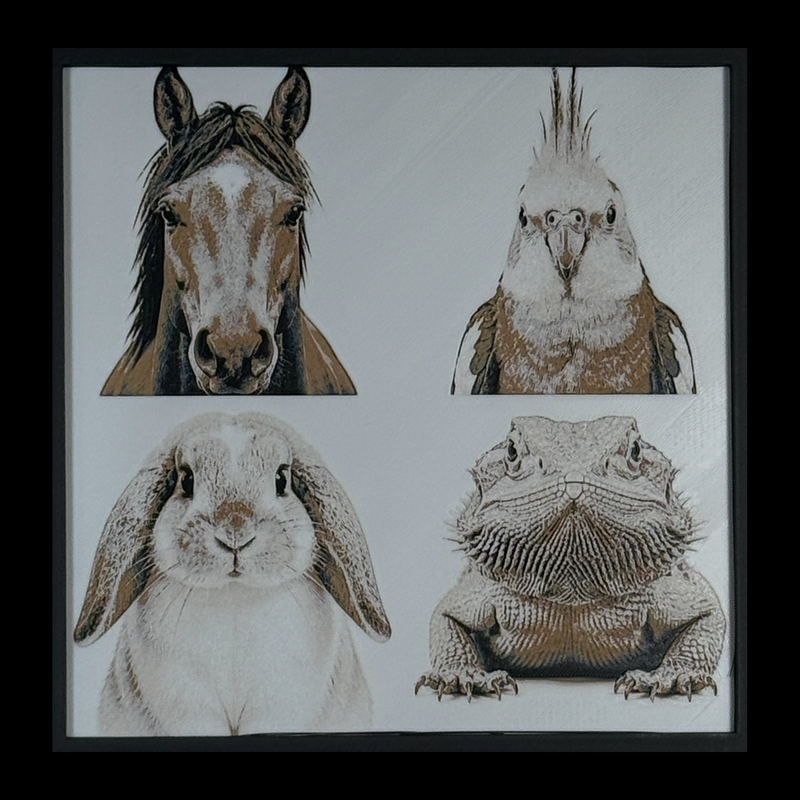
Memorial Art for Horses, Birds, Rabbits, Reptiles, and Other Companions
A companion does not need to be a dog or cat for the relationship to deserve a personal...
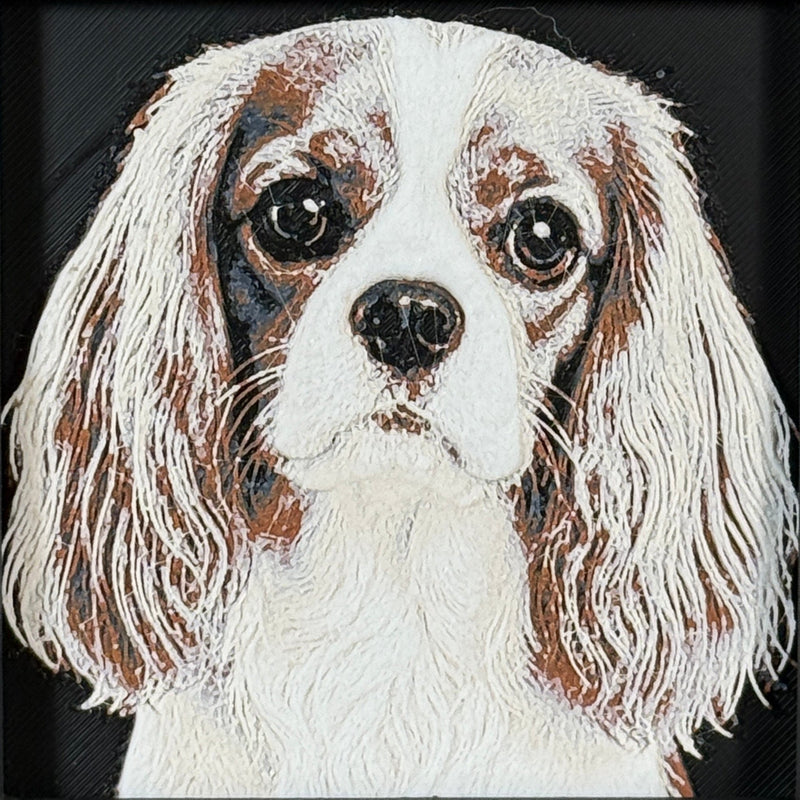
Pet Collar Memorial Display: How to Keep the Collar Safely at Home
The original collar should remain with the family. Photograph it, measure it, confirm the current display format, and...
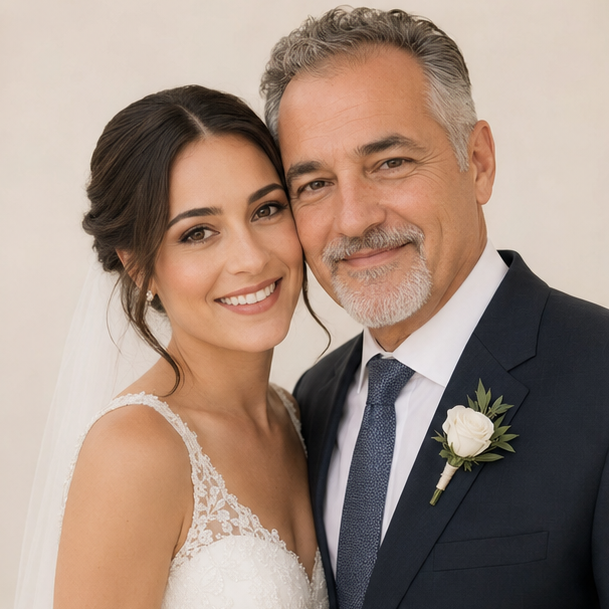
Wedding Photo Gifts for Parents and Grandparents
The strongest parent or grandparent gift uses the wedding photograph that belongs to that relationship—not simply the couple's...